Observe
Look closely at posture, movement, sound, rhythm and the musical result—not only at whether the notes are correct.
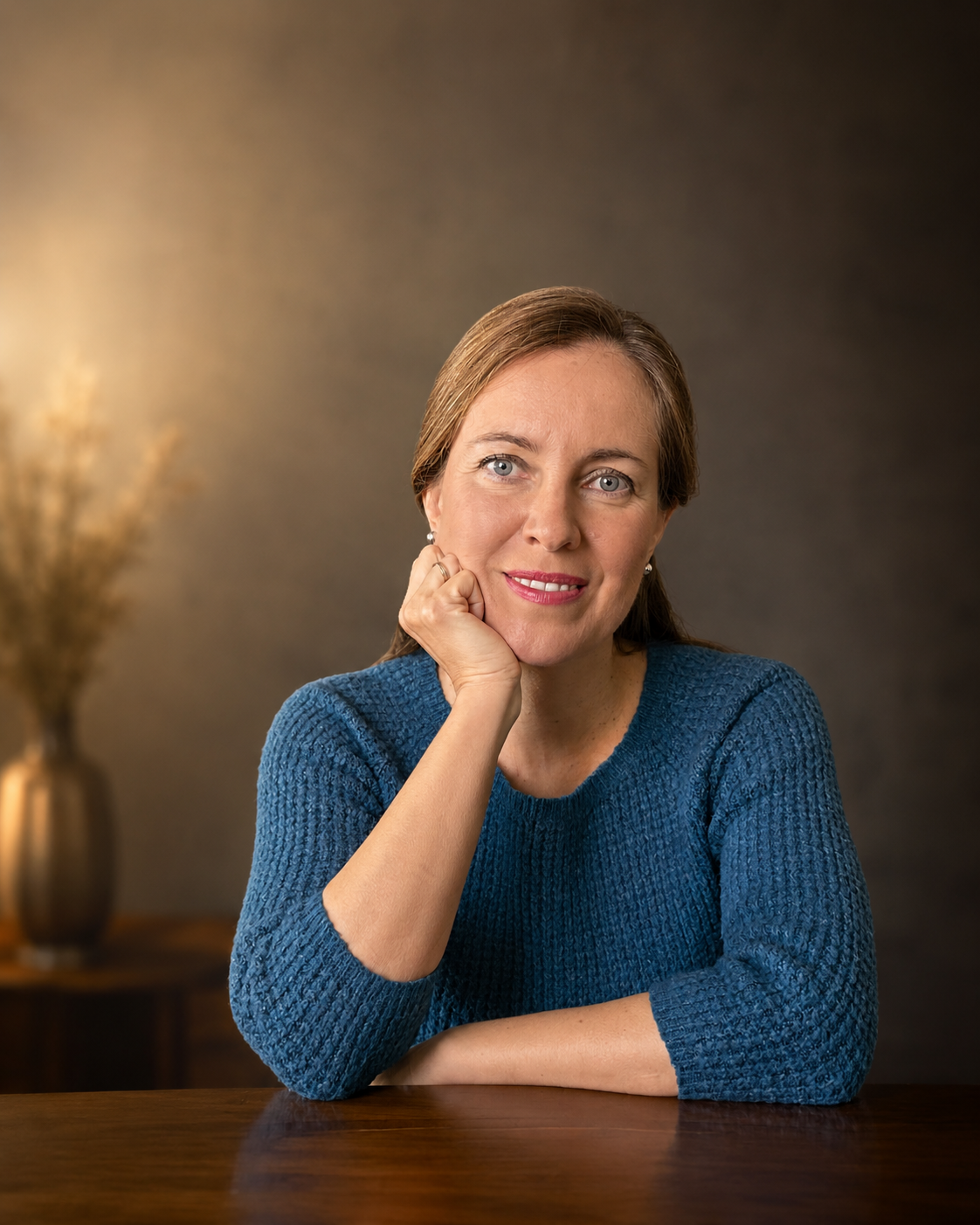
About Maite Iglesias
Maite helps adult learners understand the priority behind the problem—so technique, sound and musical direction can develop together, without practising blindly.
The Maite Method
Maite’s teaching begins by identifying what is actually happening, clarifying why it matters and choosing the next priority that can move your playing forward.
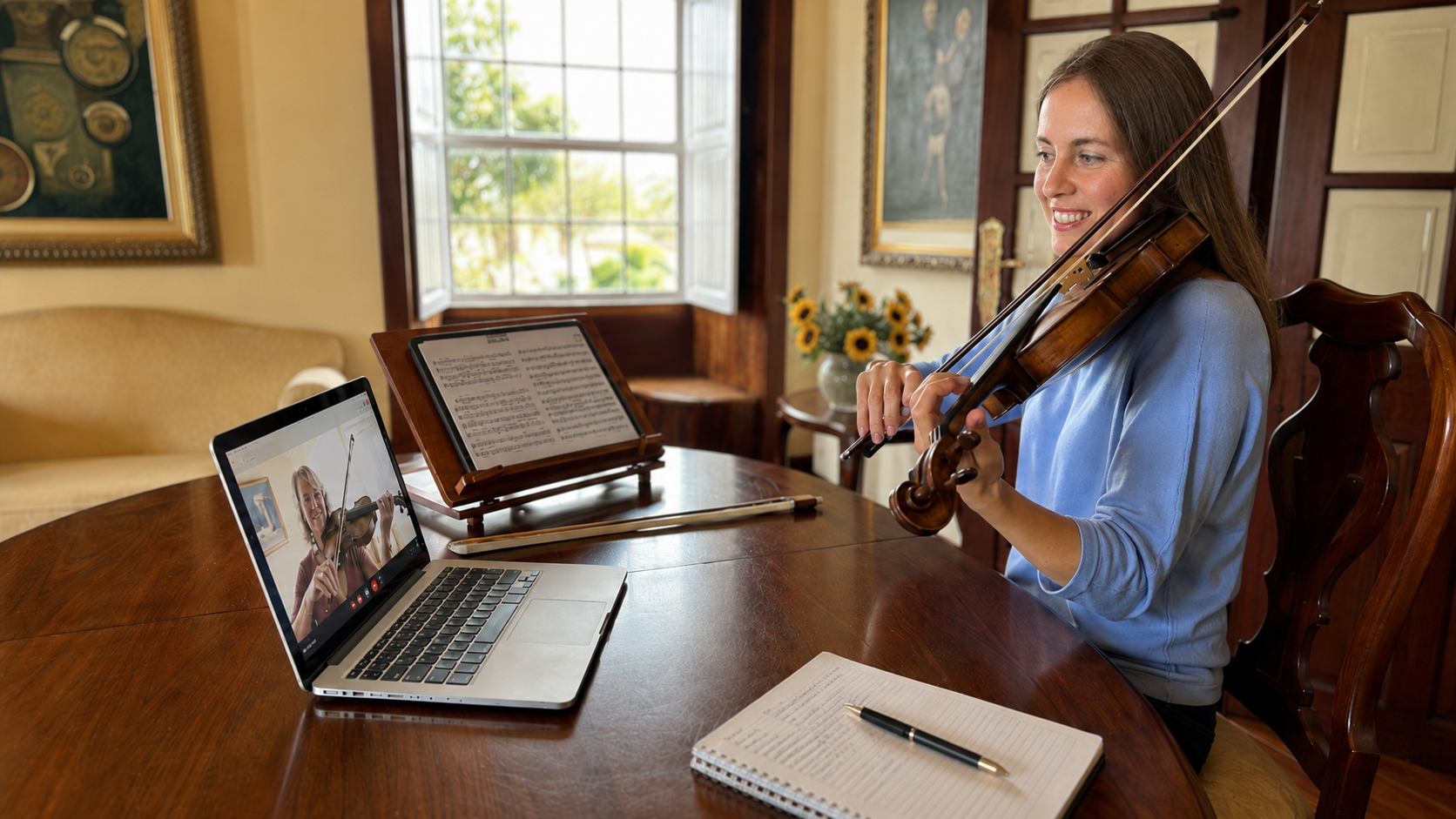 Observation · clear next steps
Look closely at posture, movement, sound, rhythm and the musical result—not only at whether the notes are correct.
Separate the main issue from secondary symptoms so that practice has one understandable purpose.
Work in manageable steps, listen to the result and know what should come next rather than repeating blindly.
Maite’s musical training
Her higher music studies at the Royal Conservatory of Music in Madrid, completed with highest honours, gave her three complementary perspectives on playing. Today, those perspectives come together in the way she teaches.
Royal Conservatory of Music, Madrid · highest honours
Maite’s core violin training developed the technical foundations, instrument mechanics and physical organisation needed for reliable, consistent playing.
Her chamber music studies deepened listening, timing, balance and musical direction—the elements that allow a phrase to communicate rather than merely continue.
Her work in Baroque violin added another perspective on articulation, rhetoric, colour and historical style, helping her make musical choices more conscious and specific.
Teaching adults seriously
Adult learners bring experience, limited time, strong reasons for learning and often a history of mixed advice. The teaching must be exact without becoming disproportionate.
Explanations build on what you already understand instead of assuming a blank slate.
You should know what changed, why it changed and what to listen for next time.
Practice is organised around the smallest useful next priority, not a longer list.
Camera position, preparation and observation are treated as part of the teaching method.
Choose the right level of support
Maite’s role changes according to what you need: a structured sequence, a focused diagnosis or ongoing individual judgment.
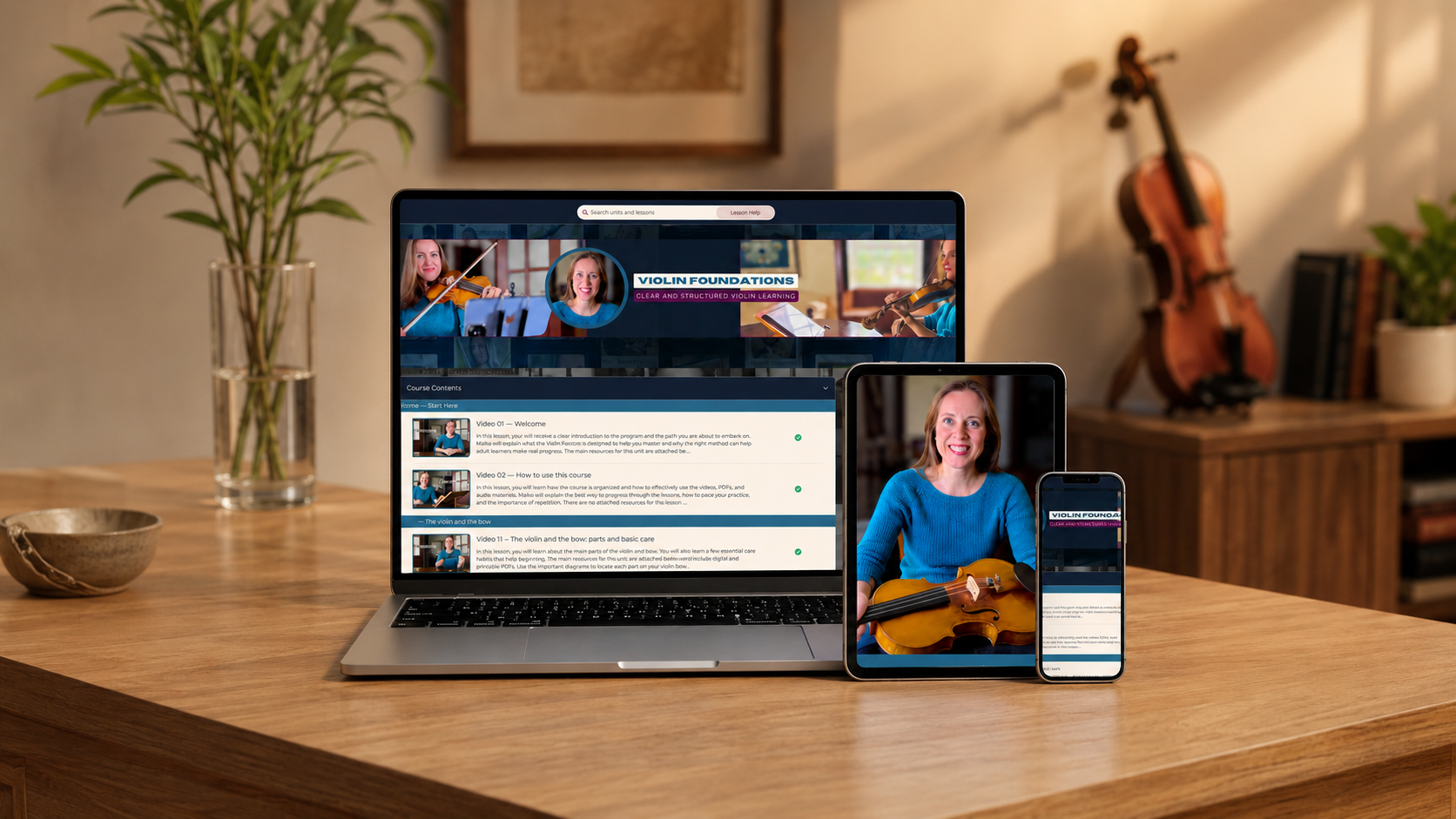
Online course
Build a strong foundation with structured lessons, clear videos and practical resources. Learn at your own pace.
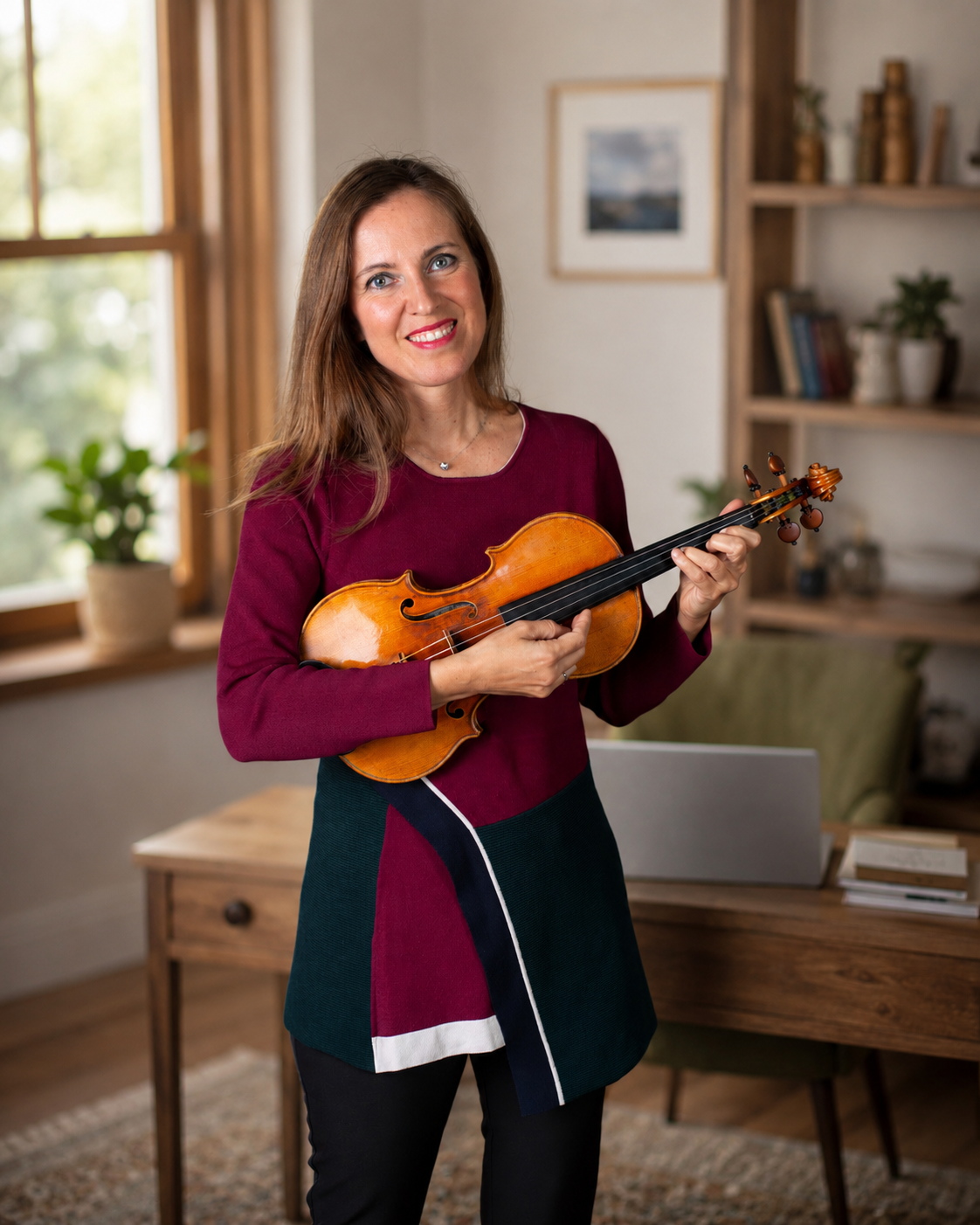
Live guidance
Study regularly for three months with an associated teacher or directly with Maite, with feedback and accountability.
Focused session
A focused session to identify what is holding you back and leave with clear, practical next steps.